Interoperability & Compatibility
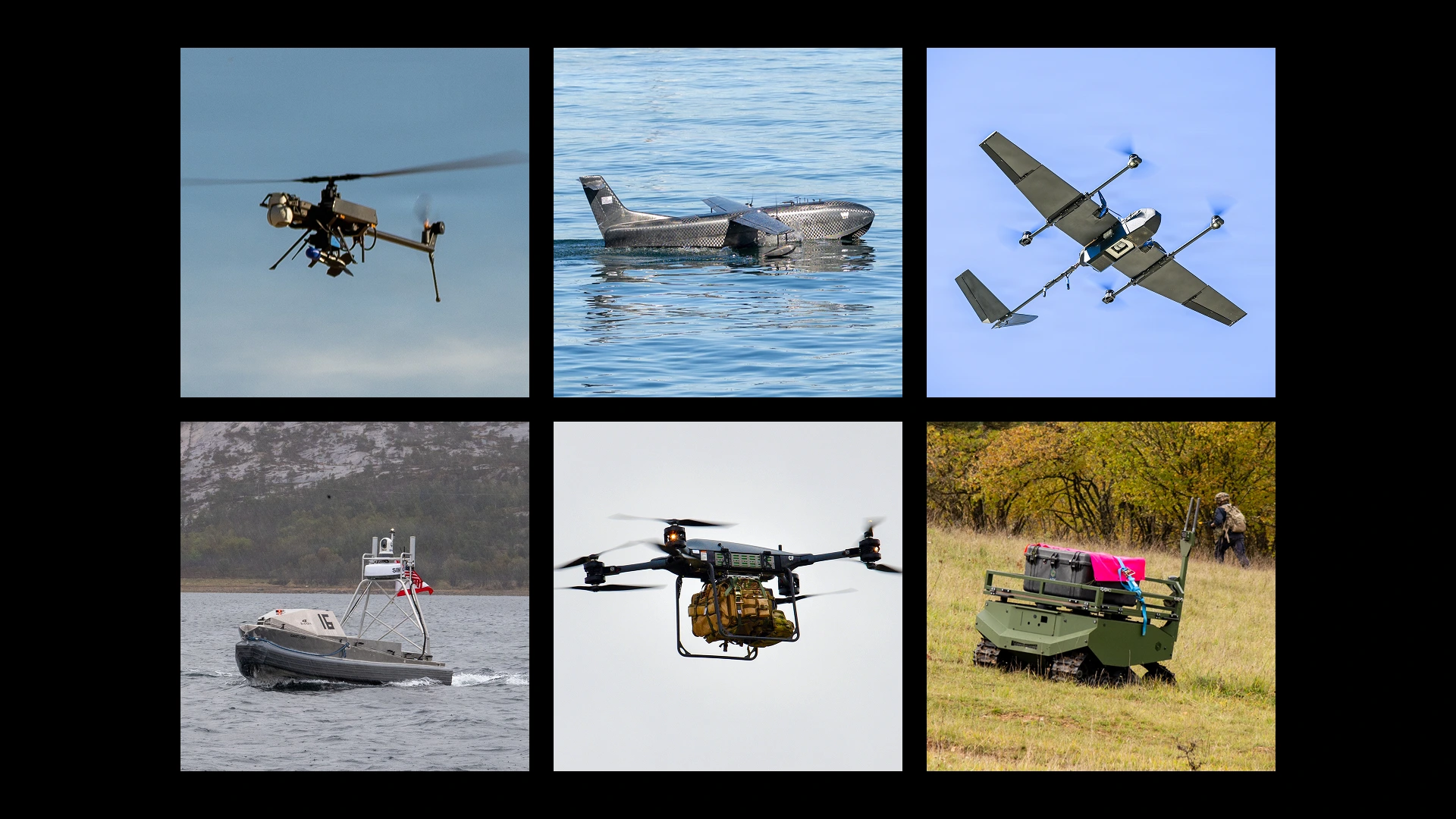
Integrates across vendor-diverse platforms, autonomy stacks, any sensor, mission system, TAK/CIP/COP tool, or third-party model through an open, modular (MOSA) architecture.
Execute, orchestrate, and adapt across systems as a synchronized, mission-ready fleet.
Scroll
Modern operations cannot keep pace when every autonomous platform requires its own operator.
Frontline Autonomy enables drones, sensors, and autonomous systems to operate as a coordinated fleet, turning commander intent into orchestrated action while reducing manual control and maintaining mission continuity in every environment.
Turn mission intent into immediate, coordinated action across autonomous systems – without continuous oversight and operator-to-system bottlenecks.
Synchronize systems across vendors, fleets, and operational environments to execute together while maintaining commander intent.
Dynamically re-task systems and adapt behavior based on changing threats, mission inputs, and operational conditions.
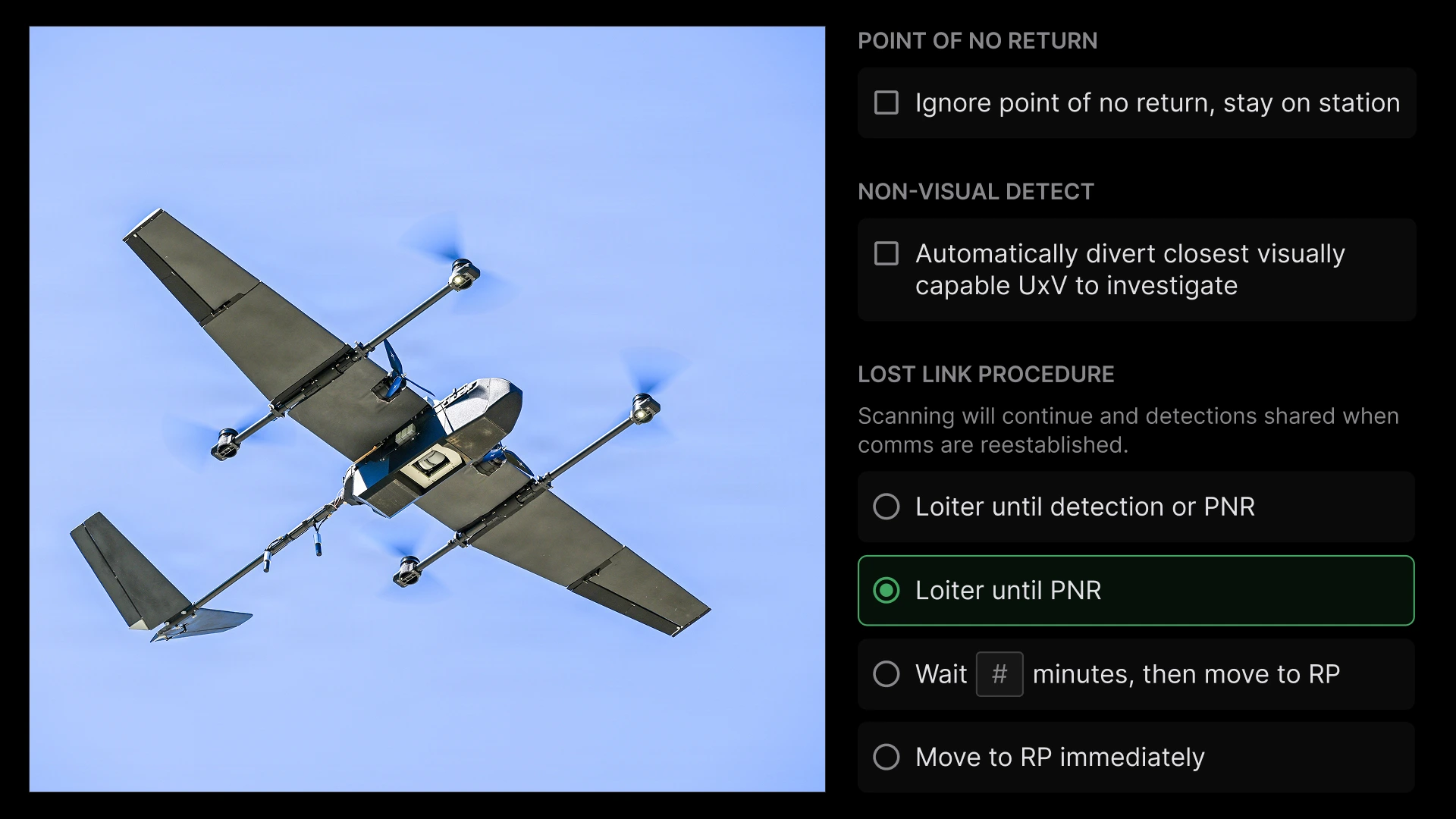
Sustain coordinated operations through degraded, disconnected, and contested environments, even when communications go dark.
Integrates across vendor-diverse platforms, autonomy stacks, any sensor, mission system, TAK/CIP/COP tool, or third-party model through an open, modular (MOSA) architecture.
Preserves coordinated execution, tasking, intervention, and adaptation across autonomous systems at the edge – no cloud connectivity required.
Executes commander’s intent across autonomous systems using “unless otherwise directed” mission logic.
Allows one operator to coordinate multiple autonomous systems white maintaining commander’s intent.
Fuses detections and tracks across autonomous systems into a shared operational picture.
Updates mission objectives, priorities, and targets of interest during active operations without returning to base.
Continuously adapts routes, behaviors, and fleet-level execution in response to changing conditions, inputs, and commander intent.
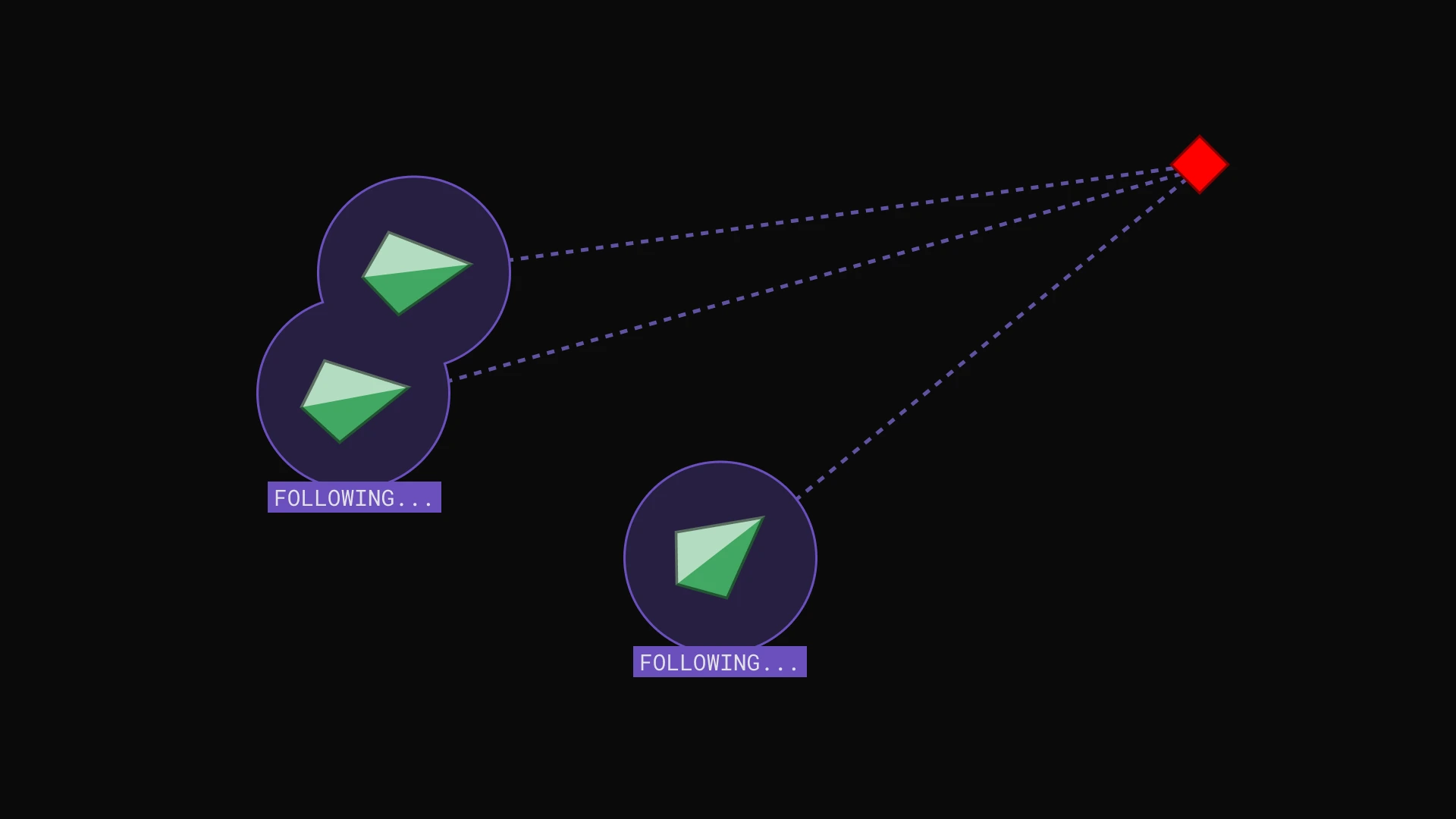
Supports Find, Fix, Track, patrol, search, maneuver, and mission-specific autonomous behaviors.
Enables operators to supervise, redirect, and override autonomous behaviors during mission execution.
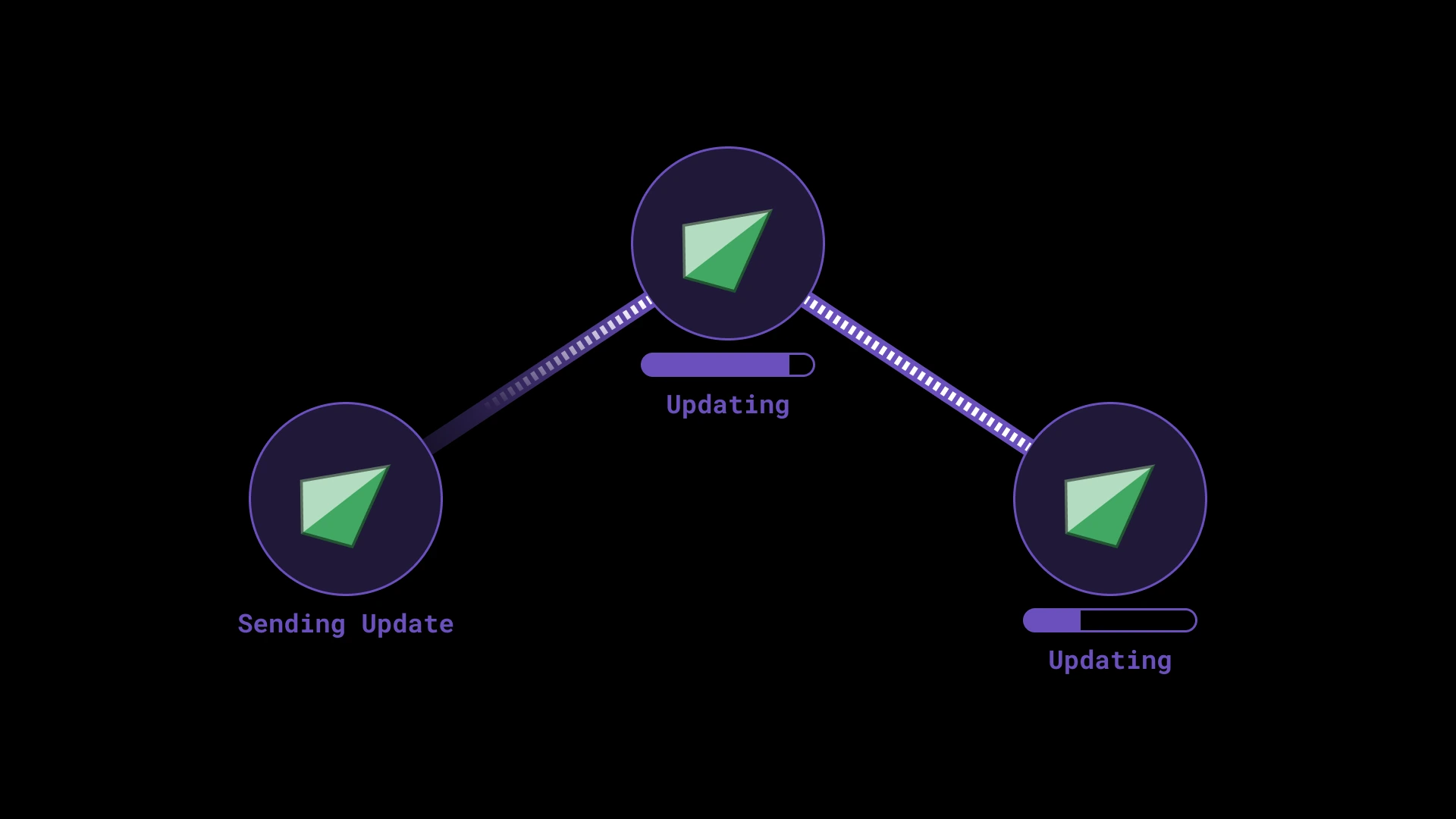
Propagates mission updates, tasking, and operational changes across autonomous fleets through mesh networking.