Operational Intelligence at Machine SpeedOperational Intelligence at Machine Speed
Real World Mission: Frontline PerceptionReal World Mission: Frontline Perception
Modern operations generate more sensor data than teams can currently process — across satellites, drones, full-motion video, and ground sensors operating at the edge, where cloud connectivity cannot be assumed.Modern operations generate more sensor data than teams can currently process — across satellites, drones, full-motion video, and ground sensors operating at the edge, where cloud connectivity cannot be assumed.
The traditional response has been more analysts, more screens, more manual processing, and more cognitive load.The traditional response has been more analysts, more screens, more manual processing, and more cognitive load.
But for a joint task force operating at the edge with limited personnel and time-sensitive targeting demands, operators need real-time detection and targeting directly where the mission happens.But for a joint task force operating at the edge with limited personnel and time-sensitive targeting demands, operators need real-time detection and targeting directly where the mission happens.
The MissionThe Mission
The U.S. Military has invested heavily in fielding sensors across every echelon. Sensor proliferation has outpaced the infrastructure and manpower available to process it.— especially at the edge, where internet access is unavailable and every transmission increases operational and electronic signature risk.The U.S. Military has invested heavily in fielding sensors across every echelon. Sensor proliferation has outpaced the infrastructure and manpower available to process it.— especially at the edge, where internet access is unavailable and every transmission increases operational and electronic signature risk.
EnvironmentEnvironment
Denied, degraded, intermittent, limited connectivity. Operating at the tactical and operational edge.Denied, degraded, intermittent, limited connectivity. Operating at the tactical and operational edge.
(Units may also self-limit or delay their own comms – including interactions with the cloud – in order to reduce the risk from their own electronic signature or 'wake')(Units may also self-limit or delay their own comms – including interactions with the cloud – in order to reduce the risk from their own electronic signature or 'wake')
ObjectiveObjective
Accelerate satellite imagery and FMV analysis to enable situational understanding and targeting. Deliver real-time detections and targeting data fast enough to create decision advantage at the edge.Accelerate satellite imagery and FMV analysis to enable situational understanding and targeting. Deliver real-time detections and targeting data fast enough to create decision advantage at the edge.
ConstraintsConstraints
Limited manpower. Limited bandwidth. Time-critical targeting requirements across multiple concurrent sensor feeds.Limited manpower. Limited bandwidth. Time-critical targeting requirements across multiple concurrent sensor feeds.
The ProblemThe Problem
Too many feeds, not enough analysts Too many feeds, not enough analysts
Sensors are proliferating at every echelon. The workforce to process them has not kept pace.Sensors are proliferating at every echelon. The workforce to process them has not kept pace.
Manual processing Manual processing
Analysts watching feeds for hours, waiting for moments that last seconds.Analysts watching feeds for hours, waiting for moments that last seconds.
Electronic signaturesElectronic signatures
Every radio call created an audible and electronic signature. At the true edge of conflict, that signature is a liability.Every radio call created an audible and electronic signature. At the true edge of conflict, that signature is a liability.
The ExecutionThe Execution
Why It MattersWhy It Matters
Processing multi-source sensor data at scale has traditionally required large teams — multiple analysts managing individual feeds around the clock. As drones have reached every tactical unit, the number of feeds has often multiplied faster than the workforce could keep up.
To complicate matters, in environments where this mattered most, the tools designed to compensate — cloud-based processing, centralized analytics, slow response time, and persistent connectivity — often aren’t functional.
Engagement 1 — Large-scale Joint Exercise
132 targets. 288 images. 15.5 hours of FMV. 9 soldiers. 38 models. Operational in under 2 hours.
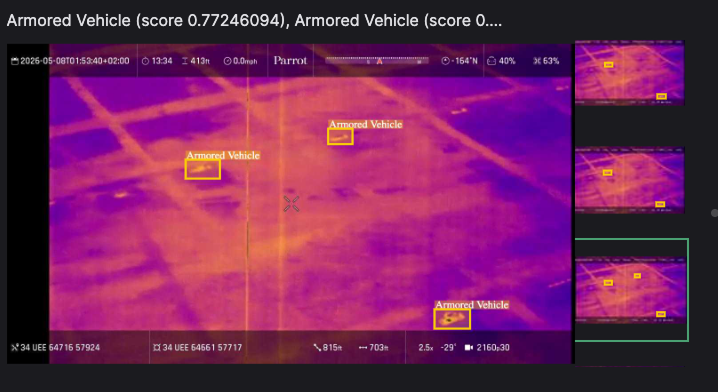
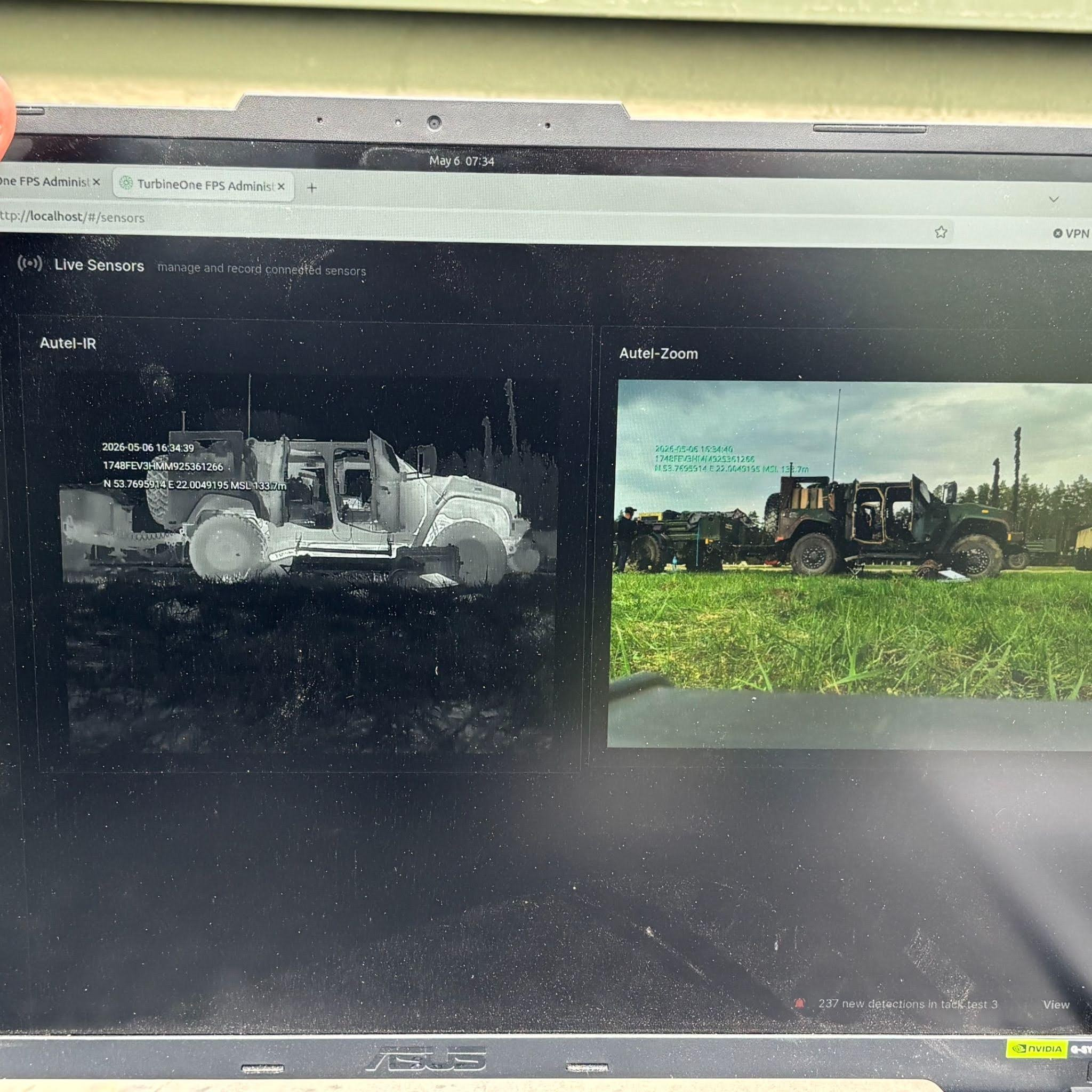
Frontline Perception ingested satellite imagery in native NGA data format and full motion video simultaneously, processing and pushing detections directly into Maven Smart System and populating live GAIA maps in real time. Soldiers built detection models on-device — no specialists, no external systems, no internet. The validated A&E workflow ran end to end: model building → employment → refinement → target dissemination.
Through a successful DIU prototype effort, TurbineOne demonstrated real-time computer vision capabilities designed to deliver actionable intelligence at the tactical edge.
- Ingest — Satellite imagery in native NGA format. FMV from multiple feeds. Decoded on-device.
- Build — Soldiers built models from pre-loaded imagery. No specialists. Average model build time: 15 minutes.
- Deploy — Models deployed immediately. Detections flowing to Maven Smart System and populating live GAIA maps.
- Retrain — Models refined in the field as conditions changed.
- Disseminate — 132 targets automatically passed to Maven Smart System.
Results:
- 132 targets automatically passed to Maven Smart System
- 288 satellite images processed
- 15.5 hours of FMV processed
- 9 soldiers trained
- 38 models built
- Operational in under 2 hours
Of all the capabilities on the floor, this is one we'll take with us if we go to war tonight." — Senior Army Official, Scarlet Dragon 26-2
Business Wire – TurbineOne Awarded Army Contract Through Joint Innovation Outpost
–––
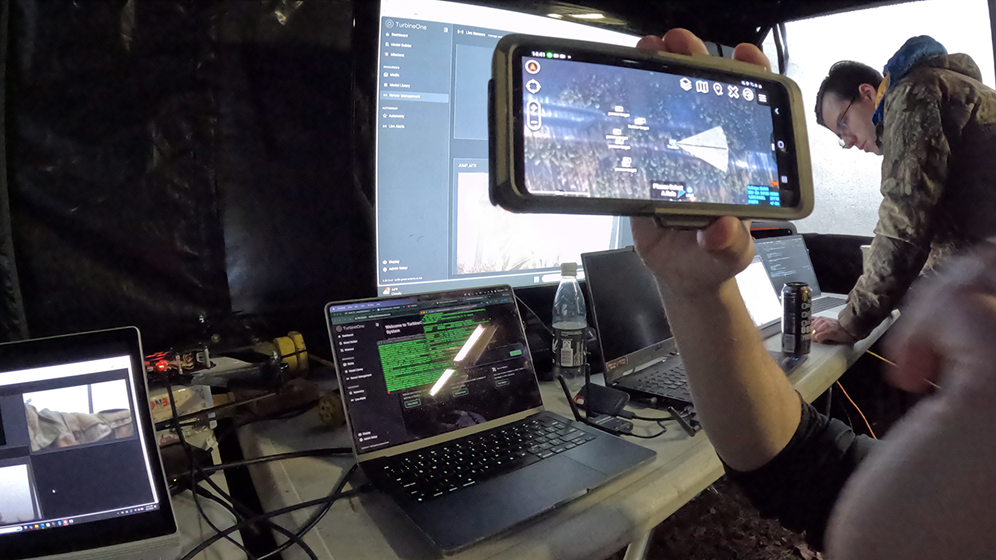
Engagement 2 — Tactical edge, Forward-deployed Stryker formation in Europe
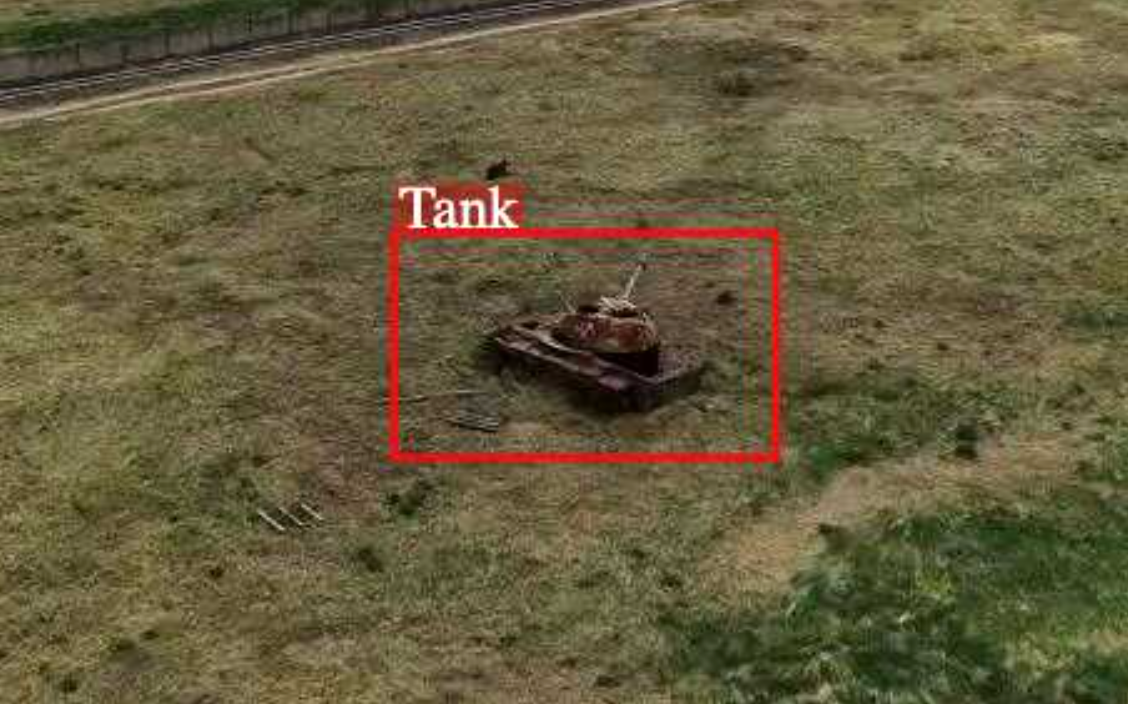
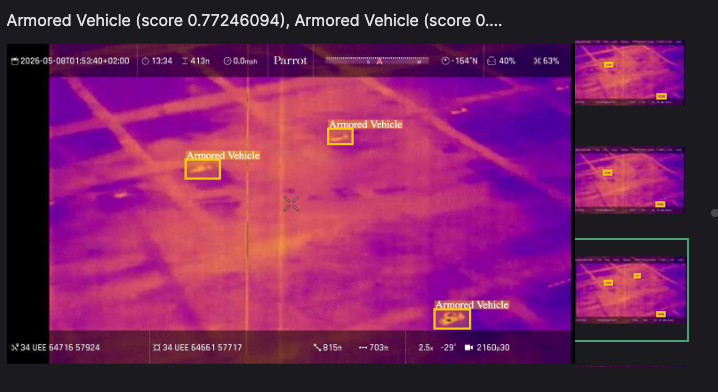
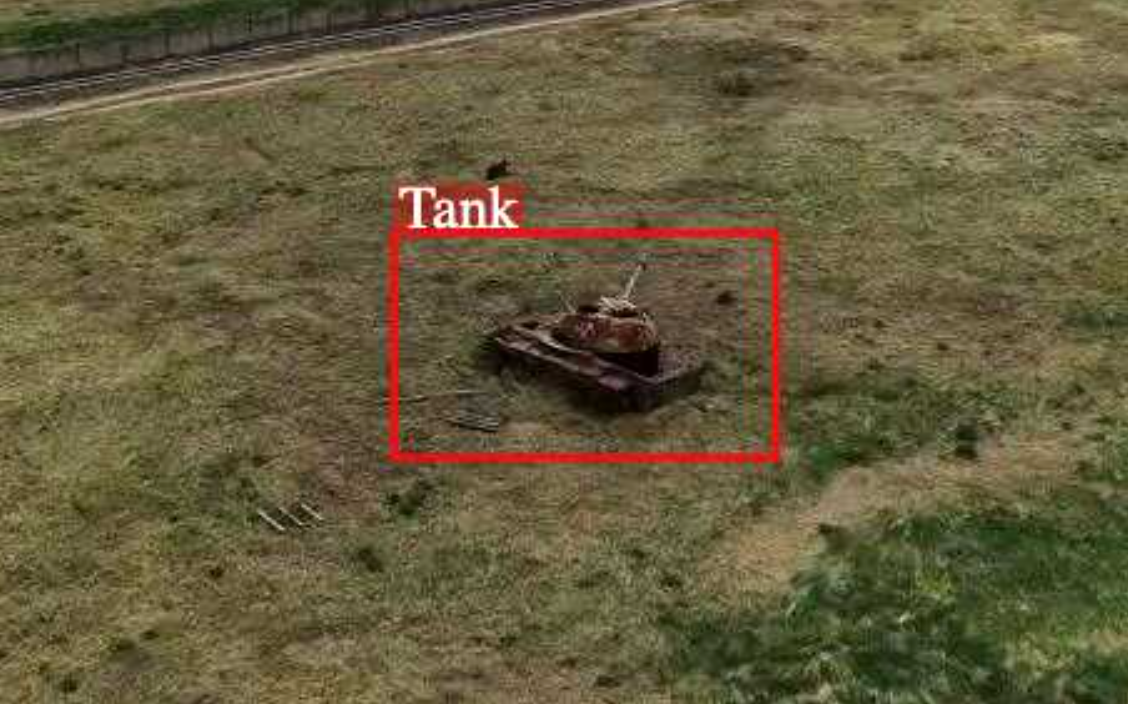
1237 — TurbineOne pulled a single media file with armored vehicles to build a model.
1242 — Model build complete. Retraining initiated.
1247 — Revised model complete.
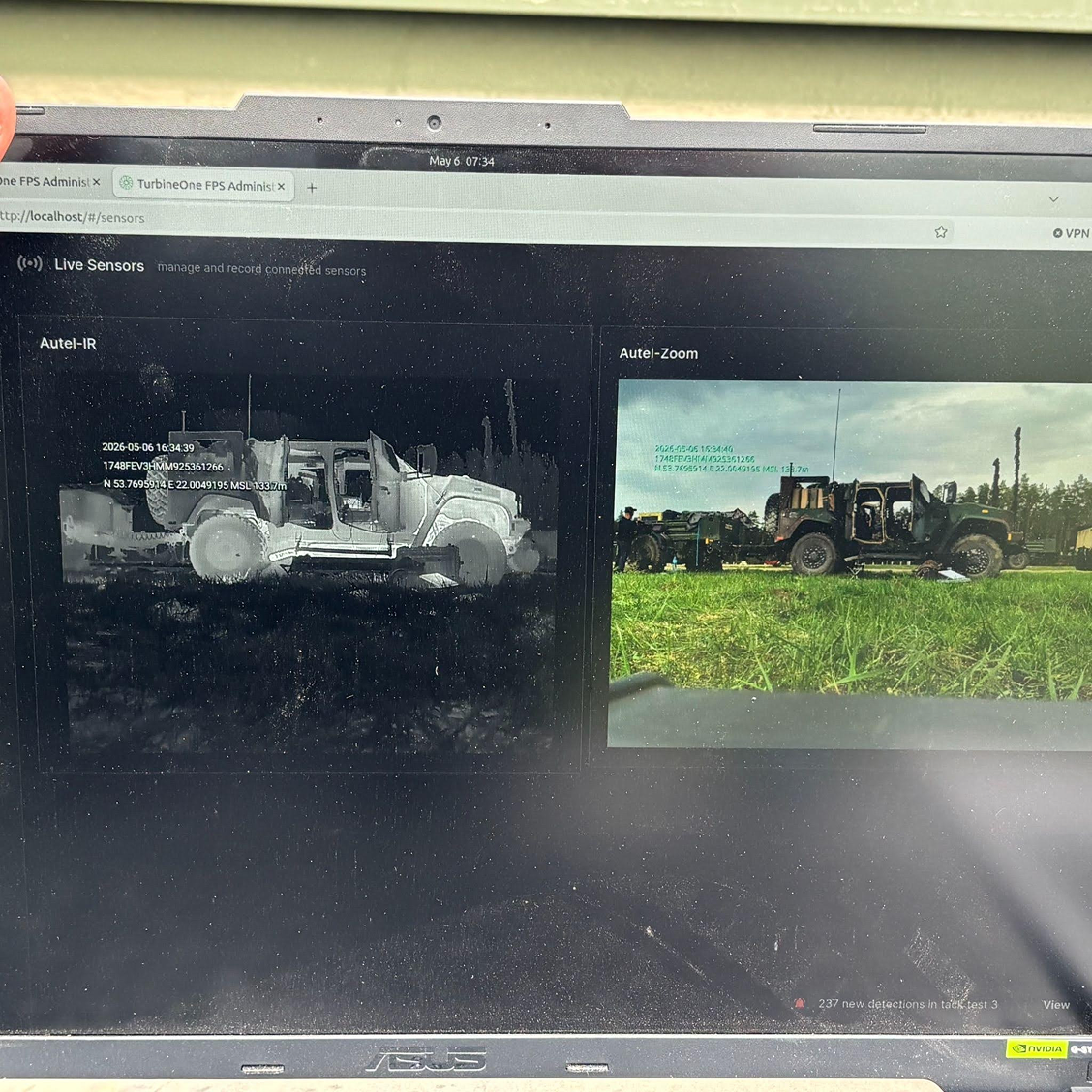
1310 — Mission begins. 6,000 detections projected in command post. Target locations populating on TAK.
1337 — Target validated. Operator selects target with Hornet UAS and conducts kinetic strike demonstration.
Call for fire, which averaged 90 seconds during the exercise, was reduced to 9 seconds.
Results:
- Call for fire: 90 seconds → 9 seconds
- Zero models to validated kinetic strike: under one hour
Frontline Perception changes the analyst’s job entirely. Instead of sitting in front of screens for hours looking for anomalies, operators can focus on validating the detections that actually matter. Teams no longer need to rebuild models from scratch for every new environment — they can share and reuse proven capabilities across the enterprise.
A small team can now accomplish what once required continuous, around-the-clock coverage.
"I've tried and tested five different ATR capabilities — TurbineOne is the only one that actually works." — XVIII Airborne Corps
A model built at the brigade level becomes immediately available at the division level. A detection made at the tactical edge can populate the Corps’ common operating picture in seconds.
What began as experimental deployments is now operational software supporting real-world missions across multiple service branches.
The Wall Street Journal – Army’s Contract With Startup to Give Soldiers Battlefield